Dee's kitchen made
Bulgogi
“Doubled the pear. Don't tell anyone.”
Want · 3Cook it too
A week of meals in just a few words. Manners plans the nights you actually cook, prices the basket before you buy it, hands you the list — and stays with you at the stove.
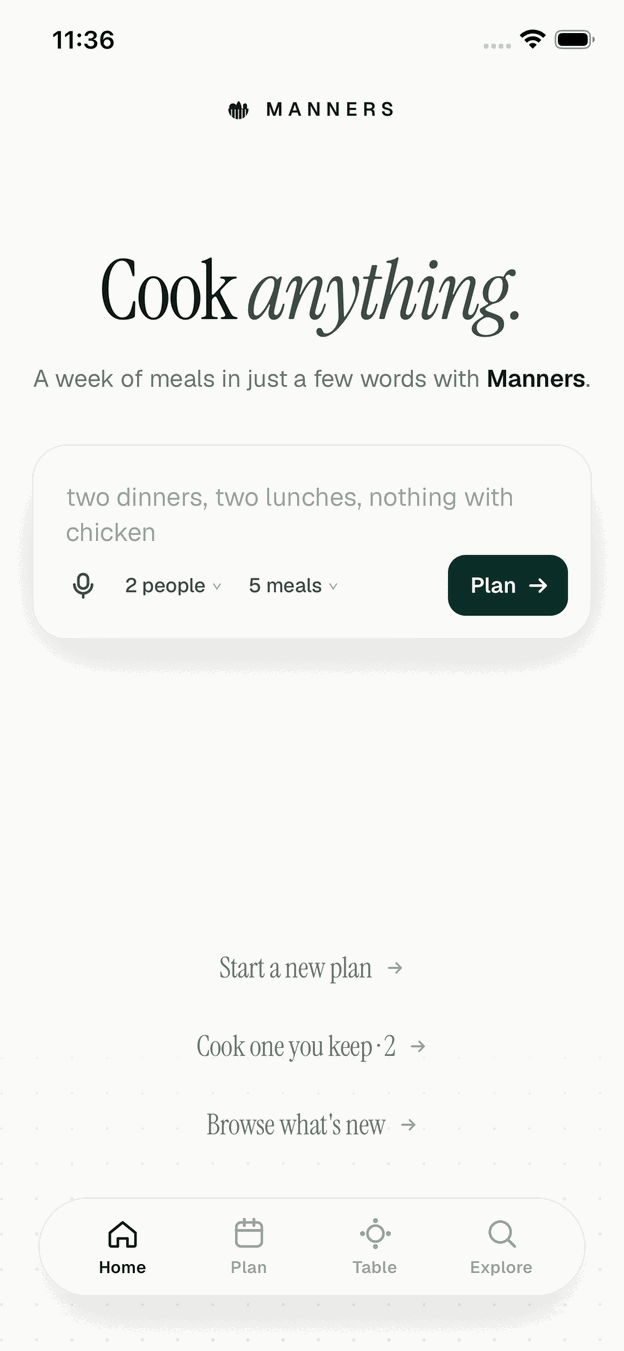
You say
two dinners, two lunches, nothing with chicken
How it works
No grid of nine hundred recipes to scroll. You describe the week the way you'd say it out loud, and Manners does the part nobody enjoys — on the phone, with no model call and no network.
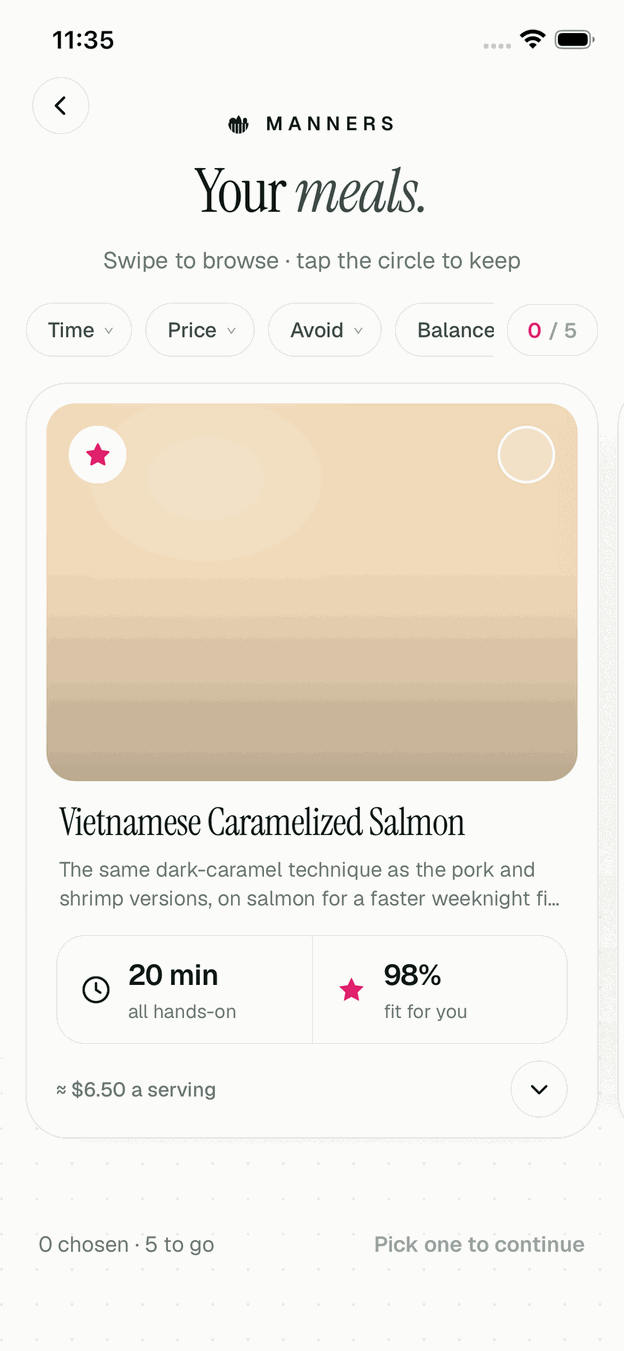
The plan
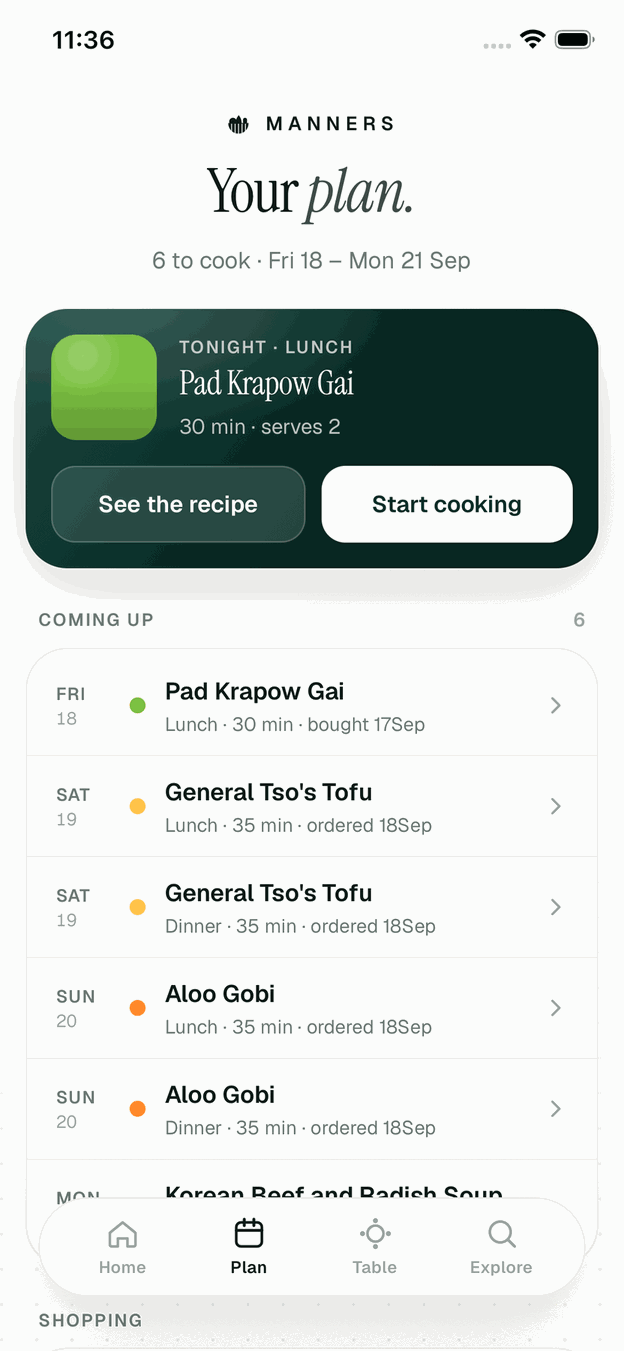
One screen that knows the difference between what you're cooking in an hour and what you're cooking on Sunday.
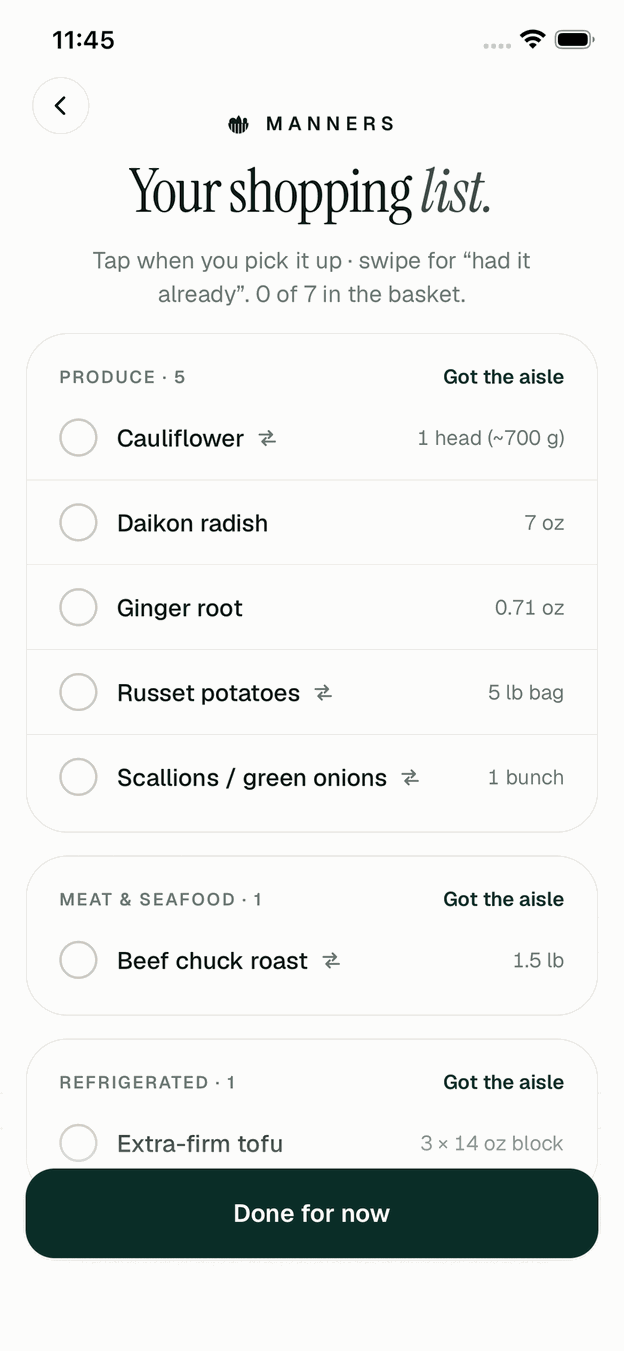
The list
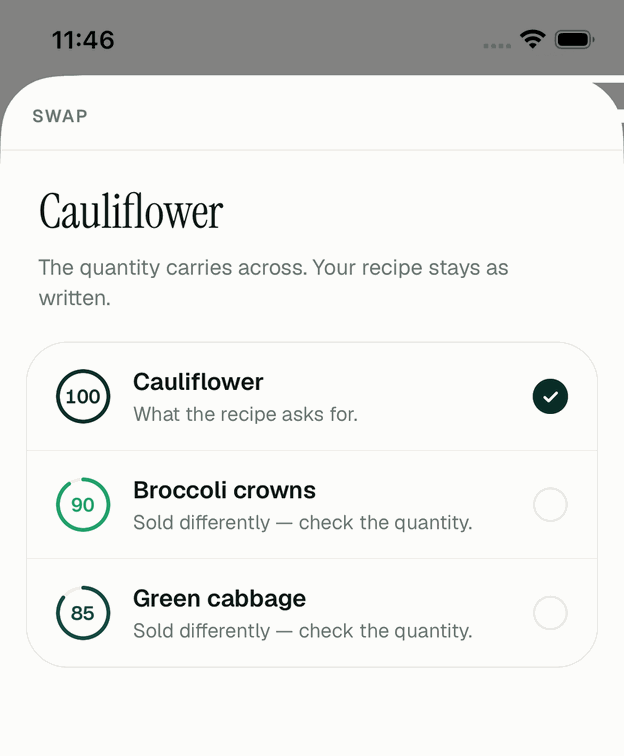
Produce, bakery, meat and seafood, dairy, the dry aisles, oils, spices — frozen last, on purpose. One lap, not three.
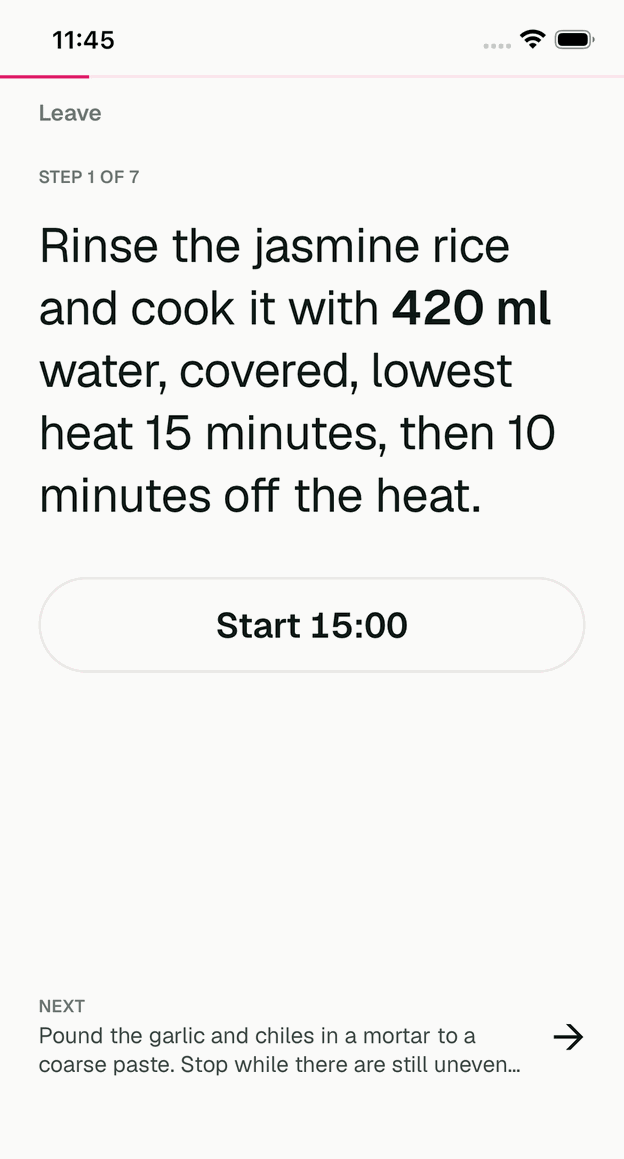
Cook mode
A recipe on a phone is usually a wall of text and a screen that goes dark at step four. This is the opposite.
Kept
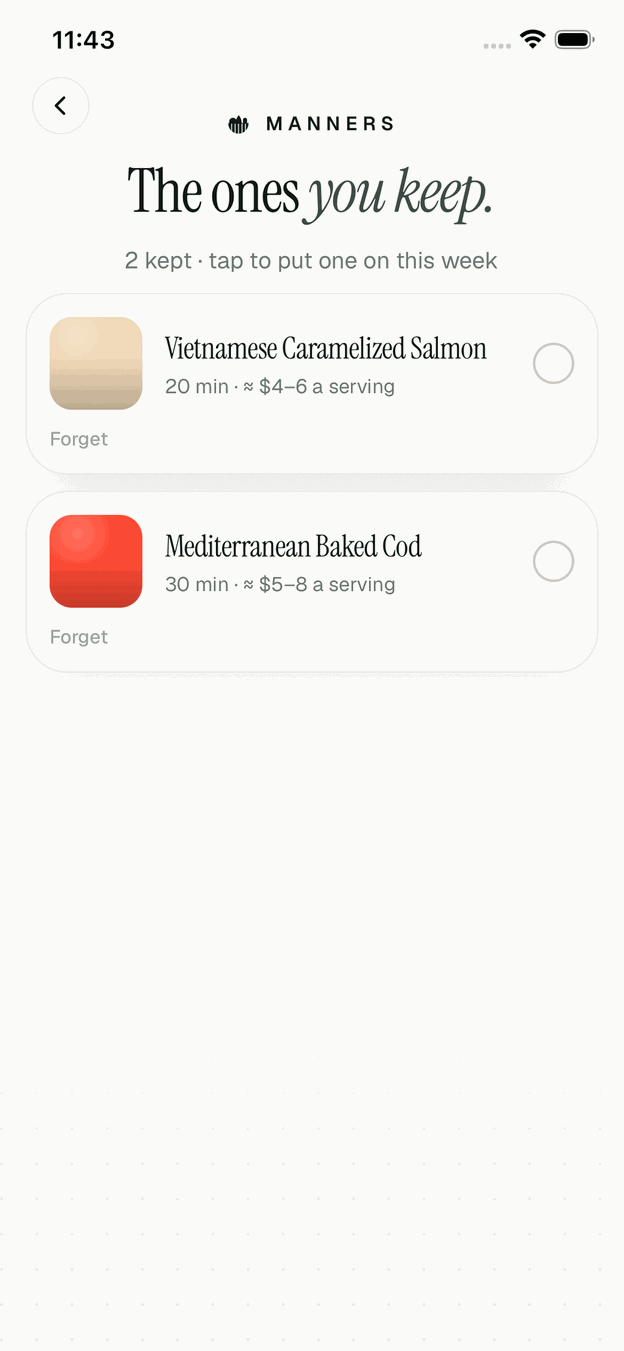
The star on the corner of every dish. It does three jobs, and none of them is “make a folder.”
What it asks, and what it never will
Each card has a sensible default already selected, so “next” is also “skip.” It learns the rest as you go — from what you cook, what you swap, and two taps after dinner.
Never asked: calories, macros, weight, goals. Manners is not a diet app, and the absence of those questions is the point.
Mark a meal cooked and it asks two things — not a star rating, not a review.
Taste
How it sat
“Noted — that goes into what gets suggested next.” The second question is the one no other planner asks. Manners is careful with it: it takes several reports, over weeks, before anything is quietly avoided, and old evidence fades — because a bad Tuesday is not a diagnosis.
The details
Most of this app is the part you never see: a planner that is a pure function of what you told it, and a catalog that has been checked against itself.
Every ingredient carries a confidence, and confidence sets the width: ±8% when the price is well known, ±18% when it's typical, ±35% when it's a guess. One shaky ingredient makes the whole dish shaky — the worst row wins, never the average. Across a week the errors combine the way independent errors do, so twenty lines don't add up to a band nobody would believe.
Every allergen a dish declares is checked against its ingredients, and every ingredient against the declaration — optional ones included, because “optional” is not an escape hatch. An allergen is never a warning on a shown dish. The dish simply never appears.
Taste on six axes, how things have sat with you, price against your budget, effort against the night, ingredients shared with the rest of the week, variety, and what's in season — all in one number.
A ceiling, a removal and a balance are three different kinds of thing. Time and price are hard ceilings. Avoid removes — it never “ranks down” an allergen. Balance only reorders, because emptying the deck over a preference would be the wrong kind of obedience. And anything you've already kept is never hidden by a filter you set afterward.
Thursday's tacos already need the bunch of cilantro, so Sunday's rice bowl adds nothing to the basket. The planner knows the difference between what a recipe uses, what the shelf charges, and what a dish actually adds — and it plans around the third one.
Each dish wears a tone keyed to what it is — tomato and chile run red, herbs green, grain and egg amber. Photographs of dinners you'll never make are the thing this app is not.
What you cooked recently steps back — quietly, never excluded, so a thin week still fills. Unless you kept it. Then it's welcome back whenever it likes.
A plan implies a grocery run, and a grocery run that hasn't happened yet can't feed anyone this evening. Weeknights get a 30-minute budget, weekends 55, lunches 20.
Protein, carbs and fat per serving, estimated from the ingredients. Shown so you can balance a week — never turned into a goal, a score or a streak.
The Table
Every other food app shows you photographs of dinners you will never make. What gets passed around here is the dish itself — so when a friend cooks something good, it lands in your week already priced for your household, scaled to your portions, and on a night you actually cook. A photo cannot be cooked.
Tonight
Bulgogi
“Doubled the pear. Don't tell anyone.”
Chana masala
“You said you wanted something for the freezer.”
Yesterday
Pad Krapow Gai
Explore
A short editorial shelf that changes with the season. Nothing on it touches your week unless you keep something — and if a collection is paid for, it says so before you read it. Sponsored cards exist here and nowhere else in the app: not in your plan, not in your list, not at the stove.
Apples and cider are at their cheapest, and the oven stops being a burden.
Every dish in the catalog that leans on one.
A bolognese that pays for Sunday afternoon all week.
Sheet pans and skillets. Dinner, then one thing in the sink.
Held to
What's next
Some of this is finished and waiting for a build; some is a stated promise. Either way, the waitlist hears first.
The third row of the week grid is drawn and waiting. Breakfast is a habit more than a decision, so it gets handled like one.
The mic in the composer. The same parser, spoken.
Hands-free advance at the stove — the single most felt moment in the product, and the reason cook mode gets used past step three.
Kroger and Instacart, without leaving Manners. Real store prices tighten the band to ±3%, and a store substitution can never sneak past your allergen filter.
Batch mode: one cook session that interleaves dishes, filling one dish's oven time with another's chopping. Scaled to each dish's own keeping window, so a plan never quietly turns into waste.
Finishing a cook posts it to your table; one tap hands a dish to a friend, already priced for their kitchen.
Alongside the emailed code, for people who'd rather not type one.
“Sunday's plan is ready when you are.” That's the entire notification strategy.
The whole planner is shared code already. The phone shell is what's left.
Questions
Manners is on iPhone now through TestFlight for early testers, and the waitlist is the order invitations go out in. Join it and you'll get one email when there's a build for you.
No. Planning, shopping and cooking need no account, no email and no password — your household, your allergies and your week stay on your phone. Only the Table, for cooking with friends, asks you to sign in, and it does that with an emailed code.
Yes. The planner, the list and cook mode are all on-device. Going online fetches new recipes when there are some, and powers the Table.
Nine allergens — dairy, gluten, egg, soy, shellfish, fish, tree nut, peanut and sesame — are gates, not warnings: a dish that carries one never appears, and a swap that would introduce one is dropped rather than ranked down. Every recipe's declaration is checked against its ingredients both ways, optional ones included. That said, Manners can't know how an ingredient was manufactured or what a store substituted, so if a reaction would be serious, always check the label.
Today they're estimates — from regional averages and real pack sizes — and they're always shown as a range so you know how sure we are. When ordering arrives, real store prices tighten the band to about ±3%.
While it's in TestFlight, yes. If that changes, the waitlist hears before anyone else.
iPhone first. The whole planning engine is already shared code, so Android is a shell away — it's on the list above.
On this page: the email you give us. In the app: nothing, unless you sign in to the Table — then your email, a name, a handle, and what you post to your tables. No analytics, no ad trackers, no location, no selling of anything. The privacy policy says the same thing at greater length.
Be there on day one